Club Reviews: How Excellent Companies Avoid Dumb Things

Sunday, September 23, 2012

I enjoyed this book tremendously. Inside as I read the pages it all sounded so familiar and it made sense. Our workplace today functions exactly how the writer has stated. The newest thing today is culture change but it is hard to get everyone on board to except it. Change is a hard concept for employees as well as leadership to adapt to.
People are afraid to take chances and improve themselves as well as their departments.  No one is willing to stick their neck out for what they believe in because they are afraid of failure or reprisal. I especially like the Silo way of management. Our Director today just spoke about that and we function as a Silo and that is one of the first things we are going to change. We need to communicate in order to function as a team. It won't happen in a day but if we work together we will achieve our goal. As I read the book, it all sounded too familiar.  Great book, its a keeper. Patricia Garcia, Miami

As I read Smith's book, I could continually bring to mind specific instances during the life of my business where the Eight Barriers were in play.  Likely, those barriers have kept us from growing as efficiently as we would like.  The practicality, and sometimes sheer simplicity, of the ideas give an excellent road map to a manager who is interested in enabling employees to take ownership of ideas to help a business grow.
The book does feel like a sales pitch at times.  As is usually the case with the "sales pitch" book, however, real life examples encountered by the author as he consults with real life companies make for invigorating and enlightening reading.  I have already begun to address some of the barriers in my office.  Now if I could only find employees who bought in and spent even some of their time coming up with great ideas to grow the firm.  I am ready to tear down the communication walls and watch profitability soar. Scott Rembold, Coral Gables

Neil Smith provides superb illustrations of how barriers affect how change happens within the organization. He spells out how complacency and lack of urgency can be a strong deterrent to effective execution of new processes.  I learned most of all people across all levels can be agents to change and Management must recognize that empowerment of employees is beneficial to the organizations long-term goals. I would recommend this book. Peter Kihn  Sterling Heights, MI
This is a well-written book. It flows very well which means the principles and stories (examples) weave together very well. It also means that the content has a kind of internal logic in the order in which things are presented. At times, though, I felt that there was an overwhelming amount of content to sift through. My copy of this book is full of underlinings and curled pages. A lot of what was in the book would be considered “reminders” for me. I’ve heard it, done it or written about it myself. I did enjoy how it was all brought together based upon another person’s professional experiences so much like my own, but different enough to have value for me.
I think that the book is in need of a subtitle that includes “managing change”. This is a major contribution to how managers should deal with change. The 8 problems that were addressed were almost like a sidebar to change, even though there was a chapter for each of the 8 problems. Even those chapters were loaded with ideas and applications about change. Bob Preziosi, Davie
Reading Smith's book gives the feeling of having a pleasant conversation with him as an efficiency expert. His Promise model embodies his ideas. Smith's company, Promontory Growth and Innovation, offers a promise combining the best elements from processes that he has used and have worked for him over the years. Promise is also the barrier acronym. The PGI Promise is designed to create the environment necessary for change. The process is clearly laid out in order to help companies save money, increase profits, and reduce complexity. It is easily understood and logical.
Internal resources are used encouraging employees to share their ideas and work together.
Psychology and communication are very important keys in the process of changing the culture of the company in order to make it run more efficiently. Examples with solutions that have been implemented are included to enhance the reality of a program that works. Personal anecdotes that are added give that extra touch! Smith so strongly guarantees that his program will work that if the program fails to do what he says it will - his work is free! What a great guarantee! That in itself is a strong incentive to read and understand the process and to have him be the guide!  You can only gain from his experience and guidance. To top it off, Smith has never had to work for free. That should tell you something! What a great book! I wouldn't try the process without his guidance though. It clearly is not for a do it yourselfer!!!  Besides, what do you have to lose by using his guidance? Margot Byrnes, Miami

 
This was a fun book to read.  It was so realistic and refreshing to see that many of the best ideas are from the employee themselves, as they are the ones who are living day to day the work lifestyle and can see more clearly than the decisions that are sometimes made by company officials from an office out of the area that are implemented and assumed to proceed in a timely fashion with clear cut results.
The book shows how important it is for companies to think outside the box, look at all channels and continue to brainstorm by including the insight and knowledge from active team members, to compliment a solution that they think will be effective in that particular environment.  It is not only about implementing an idea, but also taking ownership for the idea in all phases starting with conception, moving into implementation, monitoring and focusing on changes or updates where and when needed, and finally results. Trisha Molina, Miami Springs


This book was deceptive in a good way. On first glance, it appeared to be a book that was going to be a book that was easy toy read, yes, but full of platitudes and information that would be easily obtainable anywhere.
As I began to read, I realized that this book was easy to read but was also full of good information and examples that could only have been obtained by working in depth with different companies.
The authors not only presented case studies in a way that was engaging but also displayed the depth of the problem without too much extraneous detail.
I found myself reading portions aloud to my companion as we were driving on a lengthy trip.  I could relate to some of the scenarios as a leader in organizations and as an employee.  There were many "aha" moments and times of reflection. I would highly recommend this book. Lindsey Wilkins
I received my book How Excellent Companies Avoid Dumb Things just a few days ago.  I was reading Colin Powell's latest book It Worked for Me and as soon as I finished I grabbed my book for review.  I thought I would share an interesting story with you before I begin to write my book review.  As you can see by my signature block, I am in the consulting business.  I have spent 50 years in the "defense business" working with the ARMY and Marine Corp to equip our troops with the finest combat and tactical equipment.  Although I am semiretired I still do some consulting and have numerous high level contacts across DOD.  Before I received my book for review I got a call from the CEO of a company.  I did not know this gentleman before his call but I had been referred to him by another consultant friend.  He wanted some help from me on some specific business issues within the defense sector.  We agree to meet at a mutually acceptable site to discuss what help he needed from me.  We had a long but great conversation about what he needed and I have agreed to consult directly for him as we work these issues he has laid out.  About an hour into our discussion, he all of a sudden mentions the book How Excellent Companies Avoid Dumb Things.  He had read the book and as I was very impressed.  He had contacted Neil to start preliminary discussion about starting his own 100 day project.  As you might well guess, my appetite to read the book went off the scale.  Now that I have read the book, I understand why this gentleman was excited to consider his own 100 day project.  Enough of that let me share my review thoughts with you.
I would say right up front this is a great book for any senior leader of any type organization to read and digest.  No matter what size organization and no matter what type organization, CEOs and their senior leadership team are always interested in decreasing cost and increasing revenue.  Or, that is, at least they should be!  Thus this book expertly lays out the fact that while decreasing cost and/or increasing revenue, should be every leaders goal often issues personal or organizational get in the way and the result is "dumb things."  When I do reviews I like to always start with what I call the "bottom line right up front."  For this book the bottom line is-the CEO and leadership's job is to establish vision and set strategy and then let their associates figure out how best to achieve the desired success.  There should be no argument that it is not the senior leaders but rather the folks who do the work who know where all the "dumb things" currently being done are hidden, on purpose or accidentally.
As I read and reread the 8 barriers (A PROMISE), I was struck by how down to earth and simple they were.  And right on the mark!  But then I said ok I got it and agree with the barriers and I quickly lunged into Neil's 12 Principles anxious to see how he suggested one deal with these barriers.  His Principles are down to earth and make absolute sense.  Things like engaging all the stakeholders in the process, fixing accountability, reaching consensus, assigning risk and expecting 100% implementation of all approved projects are right on the mark.
As I came to the end of the book, I was blown away by the 100-Day plan.  I could not help by think back to my days when I ran organization of 15,000 people or so about many of the "dumb things" I had seen over the years.  I was reminded that often times these things are not avoided intentionally (but sometimes they are), but rather in our day to day business we just never get around to attacking these things.  As Neil lays out the plan, shows the people that must be made available, the commitment of leadership and the organizational sacrifice, one quickly sees this ain't easy but it is essential if we are going to have an organization that changes and adapts as customer requirements evolve.  And Neil repeatedly makes the point that in the final analysis, we must have a culture change.
I highly recommend this book to any leader.  I could see where a 100 day plan could be organization wide and if for some reason not organization wide done at division or group level.  And when I saw Neil's disclosure that he had not been involved in any project that did not in combination reduce cost and increase revenue by at least 25%, I was ready to sign up.  I can't imagine any organization's senior leadership not wanting that success.  And to know that then allows the organization to decide how to employ this 25% is overwhelming.  The point is made that most companies will decide how to split this between increased revenue to the bottom line for shareholder value while using some to invest and grow the organization for the future. Doug Newberry, Cane Ridge, TN

Neil Smith uses simple observation and common sense to identify 8 barriers that enable even well managed and successful companies to stifle creativity and efficiency. He gives us all the benefit of not only the process and means to overcome these common pitfalls but to allow us to understand the psychology of why they exist and how we could deal with them.
Interestingly, many of the barriers result from individual selfishness and stubbornness and with culture change and recognition and cooperation, the restrictions to change can be overcome.
This book should be a must read for leaders, as well as managers and workers, since there is a message for each of them at their own level and a lesson to be learned. 
Marvin Stein, Coral Springs

 There's something decidedly old fashioned about author Neil Smith's book, How Excellent Companies Avoid Dumb Things. However, that's not a bad thing. As the preface points out, Smith's observations are borne of twenty years' experience. The reader definitely gets the feeling that the author has been taking notes during the past two decades. One also gets the sense that he would be very interesting to travel with or have at a dinner party due to his keen synthesis abilities. He would aptly fit what Pink Floyd describes in the song, "Comfortably Numb," as having "...amazing powers of observation."  Smith seems anything but, "comfortably numb," however, with his sharp mind and wry wisdom.
I like the structure of the book and how Smith sets up the issues as eight barriers. It's a little corny to have them spell out "A Promise," but that doesn't mean it isn't effective.  It's an easy book to read and digest especially since  at the end of each chapter he summarizes that chapter, provides a "Takeaway," a "Solution," and best of all, questions for applying to one's own situation ("Look at Your Organization").  Two chapters seemed especially relevant today: Barrier 4, "Organizational Silos;" and Barrier 5, "Management Blockers." Probably every reader can relate to organizations where one department doesn't share information with the other and is, perhaps, operating  in extreme conflict. Smith encapsulates this idea so well in his comment in the summary: "The goal of breaking this barrier is not to smash silos, but to 'turn towers into tunnels' - to get people to cooperate across silos." He also asks pointed questions at the end of this chapter to make the reader apply the idea of navigating this barrier. One especially effective question is this: "In what areas would increased collaboration and giving up some autonomy be more beneficial for the company than maintaining your individually?"  Zing. "Don't be selfish," is the unwritten "takeaway."
On a final note, I like the way the author sprinkles in sidebars by Dr. Richard Levak, an organizational consultant. His observations serve to elaborate on an idea in a chapter and this provides yet another dimension to Smith's chapter. Dr. Levak's articles usually elucidate WHY people do what they do and how it can affect an entire organization, good or bad. Barrier 5, "Management Blockers" is an example where Dr. Levak explains why an individual's behavior - feeling threatened - for example, can be toxic for an organization. If a manager likes an idea of an underling, but feels that their supervisor won't like it, he won't present the idea out of fear for his own job. It's easy to believe and most likely everyone has experienced this at one time or another, but this reader never broke it down to simple human psychology. I liked this book and would definitely recommend it. Kathy D. Doran, Miami Beach

I personally enjoyed reading this book because it brought up many issues I face in dealing my many US corporations.

I've faced many of these barriers trying to sell our data and services to corporations seeking to capitalize on the growing multicultural consumer segments in the US.  I've seen people make dumb decisions simply to avoid controversy.  They avoid making an important decision for their company, in order to avoid any type of controversy with their boss or people below them.  We see poor use of time everywhere, that is no surprise.  The reluctance to change barrier is one many corporations are experiencing right now.  The consumer dynamics are changing daily, those corporations that don't change risk becoming obsolete.  I also come across the organizational silos barrier, especially when it comes to data.  Many companies have so much data but they fail to take advantage of it because it is managed by different departments that don't share data with each other.  The miss the boat month after month by not being able to consolidate all this data and make communication between departments more effective.  I see management blockers very often, managers who feel threatened by making a decision never end up making the decision that is best for their company.  Management blockers are not easy to handle and could go one for years before someone takes a stance.  Lastly I'd like to reference the incorrect information barrier, in these data rich days it is imperative for companies to make decisions on accurate and reliable information.  There is no excuse for companies not putting in the effort to get the right data in their hands to make strategic decisions that can drive the growth of their business.  I enjoyed this book and will certainly recommend it to my colleagues. David Mesas

"This book is the perfect guide to the internal workings of a company. It addresses every aspect of management and the outcomes of poor leadership in the most critical of times. I recommend this book to anyone who wants to take their company to the next level. Enjoyed it so much, I purchased one for my boss. Great read and worth every penny. Deidre Campbell, 
Miami

Read more...

Next Book: How Excellent Companies Avoid Dumb Things

Tuesday, July 24, 2012


Here's the author's website: http://neilsmithinsights.com/

From the publisher: Every day, seemingly intelligent and successful companies make headline news for poor decisions that can cause their business to stumble and make many of us scratch our heads in wonder. Why would such a successful business make ”that” strategic decision? Neil Smith, with more than 20 years of experience leading large-scale performance improvements, reveals the hidden barriers that limit excellent companies from reaching their potential, and cause even the smartest managers and leaders to falter. During his experience transforming some of the top global businesses, Smith has identified 8 barriers that exist in every organization and prevent them from implementing literally thousands of ideas to improve the way they work:

  • Avoiding Controversy
  • Poor Use of Time
  • Reluctance to Change
  • Organizational Silos
  • Management Blockers
  • Incorrect Information and Bad Assumptions
  • Size Matters
  • Existing Processes
Rich with anecdotes and case studies, Smith identifies the ways in each of these barriers interrupt your own business. He then outlines a fast and proven process in which 12 principles of business transformation can break down the processes that hold companies back. What Smith offers his readers is the same thing he offers every day to the major companies he works with,  A PROMISE that by following his insights, the company will be able to increase communication, simplicity, and profit to levels never before attainable.

Throughout the book, Dr. Richard Levak contributes personality and organizational insights that shed light on why an individual or an organization behaves in contrary ways, giving you a better sense of why these internal walls exist and how to be aware of your actions in your day-to-day life.

Read more...

Review: SuperFuel

Wednesday, July 18, 2012

SuperFuel: Thorium, the Green Energy Source for the Future by Richard Martin. Palgrave Macmillan. 272 Pages.

Review by Richard Pachter
As a kid, I loved science fiction. Approaching teen-hood, reading SF (never "Sci Fi" — ugh!) seemed like a natural sequé from the comic books, I'd devoured since I was about six. I also enjoyed my father's Popular Science magazines and even had my own subscription for a while. I liked science in elementary school, too, but as I got older, I found it to be a challenging subject and lost interest. Blame Chemistry (and chemistry, i.e. raging hormones) if you like. Oh well.

But I've always enjoyed speculative fiction, as some SF was called, and even though my interest and grasp of the facts upon which the conjectures are based may be precarious or nonexistent, the "hard" science fiction of Heinlein, Asimov and Clark made my early membership in the Science Fiction Book Club a thoroughly rewarding experience. It was also not too hard on my allowance, which helped, too.

I don't read very much of that these days, as the cheery utopias and grim futures are less appealing in context with our current reality.

But the old SF fan in me might have been the trigger that led me to SuperFuel.

Richard Martin takes a very serious, complicated and highly technical subject and spins a very readable and entertaining text. You can read and/or download an excerpt here.

His premise — that Thorium would be a cleaner, safer and more efficient fuel for nuclear power — is presented in a convincing and lucid manner. The science and specifics are above me. My fault, since Martin does his best to avoid unnecessary jargon and math, instead focusing on the macro, rather than the micro. Though I suspect that if you have a more solid grounding in science, you will come away with a much deeper and meaningful experience and insights.

In addition to his explanation and advocacy, Martin looks at the political and commercial landscape and offers solid suggestions for dealing with any potential roadblocks with "next steps."

I have no clue as to whether or not Thorium is, indeed, the answer to our fuel problems but Martin does a fine job of making its case. SuperFuel is an interesting and entertaining book — even for old SF fans and Popular Scientists.

Read more...

Club Reviews: SuperFuel

Monday, June 25, 2012

SuperFuel: Thorium, the Green Energy Source for the Future by Richard Martin. Palgrave Macmillan. 272 Pages.

Super Fuel provides the reader with an understanding of the future as it pertains to the need to develop Thorium based energy. The author does tend to labor in the many aspects of nuclear physics which can be off-putting. Super Fuel provides a window into the future of sustainable fuels. R.W. Groce, Miami

It’s about time somebody opened a  discussion of energy from a commercial view beyond just cap-and-trade(the scientific, security and economic concerns all have to come together as affordable).  This book does a good job of it on the nuclear power choices.   Given the realistic options for green energy in a questionable economy, we must address all we have to work with.  Any substitution for green house producing gas sources like coal, must include nuclear power in some form or other.   But there are huge  problems to solve when it comes to finding alternatives to coal energy production.  This book gives us some background on the  Thorium fueled electronic energy source, (the so called next generation of nuclear) touted and praised as the future of Nuclear Energy production.
This interesting book should get credit for taking on the challenge and doing a respectable job of filling in the history of commercial nuclear power that was derived from the success of the U.S. Navy in harnessing power for ships.  It carries the ball further by hypothesizing the future of Thorium powered nuclear reactors, in light of the Japanese Fukushima flood/meltdown, and disasters of Chernobyl and Three Mile island, that curtailed the building of any new nuclear plants since approved since 1973.
Unfortunately it does not convincingly cover all the criticisms : the politics behind the suppression of new nuclear reactors, or the promotion of this energy source to allies.  It convincingly maintains that time is right for a next generation version of this clean source, and that the security problems can be controlled.  But the question of the Thorium process’ radioactive products  are the biggest concern; as well as the question of producing more fuel (it requires Uranium isotopes) that might be ripe for theft, for construction of a bomb by enemies, and possible destructive consequences if the byproducts fall into the terrorist hands.
I won’t discuss the chemical processes where this discussion gets high tech fast, or the downsides of this innovative approach to making smaller safer nuclear power.  But it is great to draw attention to these issues. This book is quite technically based and this should be left to the academic and professional community to evaluate the scientific accuracy of the authors statements. But the history of development is interesting. Credit author Martin for satisfying the curious as to how we’ll address the future of our aging (vintage 1973) reactors with the LFTRs (Liquid fueled thorium reactors). They apparently work and might be a reasonable investment in a clean energy continuum, but only if this does not undermine the present industry.
The reader gets the impression that this is not a hype book; but an attempt to prove that the technology must  be successfully demonstrated, and then justify the considerable investments if the market forces are to be allowed to address our energy crisis.  There is still a great deal of oil influence and improvements to be accomplished in making alternatives affordable.   It’ll take all types of technology besides solar photovoltaic and natural wind, geothermal and tidal harnessing.   This book sends a message to the would-be energy backer: we’d better get our science perfect.  It’s not just about our finances.  With some estimates as high as 65% of the population against nuclear power;  the everyday business person must  improve his/her technical knowledge to share facts with the average citizen and bring our consciousness  to the knowledge levels of countries we compete with for energy and economic benefits, before we vote this out.  Then we can evaluate  the promises and claims to make real progress.One disturbing fact in the launch of this book however is that energy conservation groups, including the reputable Union of Concerned Scientists, who in their latest newsletter are refuting the claims of safety and improvements by LFTRs over conventional fission reactors now operating.  Investors will have to solve a few of the salt water processes problems like a threats of byproduct disposal, and control of the converting processes if the industry will be able to run this source as a successful investment. Run with it but be sure the case is clear for both pro and cons.
In summary this is an interesting addition to the non-petroleum energy literature, and worthy of consideration for people interested in green investments.  Read this book and see what you think. Jim Swaner, Miami Shores

Super Fuel is one of the most fascinating books I have read in a long time.  It is well written and well documented, relying on extensive research on the subject of nuclear and thorium power.  It delves into the history of nuclear and thorium power and how politics has allowed a more dangerous technology to be adopted when a less dangerous technology (Thorium) was already available.  It explores why the US is stuck in an inertia to change even when better alternatives to traditional nuclear technology exists and how the US is persisting in hanging on to old ways because that is the way it has always been done.  It shows how the lack of long-term planning by our government will leave us behind, while more progressive Asian  nations will move ahead of us in yet another industry.  This book should be required reading for the US Congress. Darlene Johnson, Coconut Grove

What I found to be the recurring issues of Thorium energy were described as "complacency" of the industry itself and "inability"of political leadership to reform it. Comparisons to the auto industry were made but the battle for energy solutions faces is much stronger and complex to resolve.  Many great minds of the past have wrestled with the topic.  I believe anything is possible but time is not on our side - It's not the two minute warning but were in the fourth quarter.  Peter Kihn, Sterling Heights, MI

Super Fuel attempts to promote thorium,a cheap,safe, abundant, and readily available energy source from the past that has been overlooked  but is beginning to be put into use in the rising super powers of China and India.
The author's presentation is interesting but very technical and therefore difficult to understand as well as uninspiring. It reads more like a text book than a promotion for a new clean energy source.
Perhaps if it had been written more clearly, more people would be inspired and interested in the push for thorium.
More information about the mining of thorium and its benefits and use, either real or possible would be helpful.
Perhaps I was searching for something with a more exciting and clear presentation that could explain the availability and possible uses in layman's language that would be easy to understand rather than the scientific presentation. What a disappointment! Margot Byrnes, Miami

"Super Fuel" gives a good historical recount of how uranium based technology won out over thorium for use in nuclear power.  The book does seem to be somewhat one sided.  The author writes many things as though they were facts, but they seem to be more opinion or speculation.  The use of thorium is seen as a safer and cleaner energy source, although there are dangers to thorium the same as there are with uranium.  The author also doesn't cover the fact that if someone did want to build a thorium power plant in the United States, it would take decades to get approval to do so.  It seems like we would be better off building windmills or solar power plants with that amount of time and resources to complete such a project.

The book did give some insightful views of why one technology won out over another.  Not so much that one technology is better than another, but that the politics around the two technologies is what made one technology win. Frank Donn, Miam

Energy is on everyone's mind for this century.  It was amazing to read this book and learn that a possible energy source in the Nuclear family that was much better then Uranium was cancelled because it did not lend itself to military use.  However this material, Thorium seems to be a very good material to be used to produce electrical power for public use and appears to be much safer than what is now used in Nuclear Reactors for electrical power production, Uranium.

It is hope that our political readers will read this book and make a commitment to pursue this power source for the good of mankind.  Also if the United States does this they could be looked upon more so as a leader and begin another another energy revolution just like the discovery of energy started the Industrial Revolution.  It does seem that other countries are pursuing development of this electrical energy source — Thorium.  Let us hope that we can stay ahead of them in development of this green energy source. Gordon Ettie, Miami

Read more...

Next Selection: SuperFuel

Tuesday, May 1, 2012

At the dawn of the atomic age, uranium and thorium were equally important as the element of choice in researching nuclear energy. Either one could have powered the world’s reactors. But it was uranium that won out, and thorium, which is far cleaner, safer, and more abundant than uranium, was relegated to the dustbin of science. With it went the possibility of creating a low risk nuclear energy source to power our planet.  What might have happened had our scientists and our government, and the nuclear power industry invested the resources to develop this little known yet abundant element? Would we face a global energy crisis and the prospect of catastrophic climate change today? Why are countries around the world, including rising economic superpowers India and China, rushing to develop electricity from thorium while the United States, which studied thorium reactors extensively in the 1960s, plays catch up?

Now, as the world searches for cheap, non-carbon-emitting energy sources, thorium is reemerging as an overlooked solution. As one of the first energy experts to promote the development of thorium, award-winning science writer Richard Martin combines science, new historical research, and a gripping business narrative to tell the untold story of thorium power.

Abundant in the Earth’s crust, thorium has been used in various industrial processes since its discovery in 1828. Advocates, writes Martin, an award-winning journalist and senior research analyst for Pike Research, a clean energy firm, say the silver-gray element has another possible use: as an cheap, safe energy source with the potential to “solve our power crisis.” Expanding on his Wired cover story, the author explains that the element was actually used as a nuclear fuel in an experimental reactor built and run by American scientists at Oak Ridge in the late 1960s. Since then, it has become a forgotten technology, losing out to uranium, which powers all reactors operating in the United States. In the wake of Japan’s recent Fukushima Daiichi disaster, many scientists and entrepreneurs are now seeking U.S. government and corporate backing of thorium, which has become the fuel of choice for nuclear energy efforts in India, Japan and elsewhere. Martin focuses on the work of Kirk Sorensen, a former NASA engineer, now head of Flibe Energy, who urges U.S. utilities that are preparing to replace some 30 older reactors to build a new kind of reactor—a liquid-fluoride thorium reactor, which proponents consider to be more efficient and safe than existing plants. He describes how uranium-based nuclear reactors came to dominate the nuclear industry and how industry leaders are now thwarting the use of thorium power, while conceding its possible advantages. They complain of the high costs associated with converting to the alternative energy source. Martin also details Asia’s enthusiasm for thorium power and its implications for reducing reliance on fossil fuels and slowing climate change.

At once a big think book and a science manifesto, SuperFuel challenges us to look back at what could have been different in history and forward to an energy revolution in the making. The most important science and technology book of the year, SuperFuel will change the discussion of our energy future.

 The online press kit, which includes an excerpt of the book, is here.

About the author: RICHARD MARTIN is an energy expert and award-winning journalist. His work has appeared in Time, Fortune, Wired, The Atlantic, The Asian Wall Street Journal, and The Best Science Writing of 2004. Martin is a senior research analyst for Pike Research, a leading clean-energy research firm based in Boulder, Colorado.

Read more...

Review: SHINE

Saturday, April 28, 2012


Shine: How to Survive and Thrive at Work by Chris Barez-Brown

Review by Richard Pachter

You CAN judge a book by its cover.

I own lots of books. More arrive daily by mail, UPS, FedEx et al. I also love bookstores and libraries. (Yes, I still go to my excellent local public library and even check books out!)
Most of the books I get are advance readers’ copies (ARCs). Plainly bound copies meant for reviewers and retailers (though those sample copies are a vanishing breed, supplanted by pdfs and other digital formats.) I also receive finished books but less these days than previously.
So when I received SHINE by Chris Baréz-Brown, it immediately popped.

Here was a book that’s nicely designed: user-friendly, easy to read: pleasant typeface and clean layout. Very inviting!
I skimmed it a bit and quickly decided that I wanted to read and share it with the Biz Books Club.
And here we are.
The sub-subtitle, “Upping your Elvis,” the author explains, comes from the question U2 front man Bono asks when he enters a roomful of activists who want his participation: “Who’s Elvis here?”
He’s seeking the one person in the place who posses irresistible charisma, the group’s singular go-to guy (or gal).
It’s a good question. There’s usually someone who’s the center of gravity in every organization— and it’s not necessarily the one who is nominally “in charge.”
I’ve never met the author, but it’s implicit that he’s pretty Elvis-y himself.
He’d better be! If he’s a boring stick in the mud, he’d be way out of bounds in writing this book and offer the advice contained herein.
Advice? Yeah, that’s the crux of this book. It’s an advice-and-affirmation text that can be summed up like this: “Be yourself — BUT BETTER!”
So he encourages the reader to dress comfortably — no ties, if you hate ‘em. Dress casually or formally, if that’s your thing. What-evuh!

Be nice; open to change; resourceful; aggressive; but go with the flow...etc.
The short chapters (really just brief raps and rants) are fun and upbeat. Some of the stuff may not resonate with you and some will. You’re free to pick and choose since Baréz-Brown knows that one size fits all is nonsense and unworkable.

But most of the things he discusses are either commonsensical and obvious or kind of miniature licenses to “go for it” and let your freak flag fly by being a bit flamboyant and out there, while still taking the high road and doing the right thing for yourself and others. It’s a virtual pep talk of positivity.
Now, one wonders if any of this stuff is grounded in science and empirical wisdom.
Well, it is, to a great extent. Your attitude determines your luck!
And if you want to be successful, luck — or whatever you want to call it — is essential.
“Upping your Elvis,” indeed!

Read more...

Club Reviews: SHINE

Wednesday, April 18, 2012


Shine: How to Survive and Thrive at Work by Chris Barez-Brown

SHINE: How to survive and thrive at work – upping your “Elvis factor”!  is an attractively packaged book… it’s small enough to fit into a briefcase or purse, with small excerpts on being the best you can be at work – as well as at home, with personal lives, and any other time you might have. I liked that each excerpt was just a page or two – easy to read, and easy enough to refer back to, if needed.
Barez-Brown has written a book that I’ll be sending to my children. It’s all common sense, so even if you say to yourself that you know what he’s writing, HE is the one who took the time to do so, and sell the product <grin>. If you read the short book, and can come away with just one or two tips to making life better for you, it’s worth the investment of buying the book and reading it. Betty Hubschman Miramar

The book is an easy read however it is a little simplistic in it is approach to daily work challenges. Suggest getting the cliff note version and save time and money. RW Groce, Miami

From the clever, creative cover where even the word SHINE shines to the end of the book, Brown shares his positive perspective and philosophy toward life and all aspects of it including work. Most lf the suggestions he offers are given in a positive format. There are very few do nots.
As he shares his suggestions, he points out ways to encourage a positive attitude toward life for yourself as well as for the treatment of others. His positive writing format makes you want to follow his advice and philosophy. The anecdotes he shares offer proof that his positive perspective works!
Shine is a book that needs to be shared with others. It's also an excellent book to have on hand to refer to and reflect on when you need a boost to remember to use positive attitudes. This book is a Keeper!!!! Margot Byrnes, Miami

I have a soft spot for the "Inspirational Ideas/Motivational Snippets" genre of business books. Such books tend to be extremely easy reads, invariably provoke a number of thoughts that I immediately want to put into action for my own business, and generally make me feel a positive rush about my work. Shine fits the bill perfectly.
While a sales pitch/brochure for author Chris Barez-Brown's company, the book contains many quite basic ideas about attempting to inject positivity into the day-to-day of the working world. Regardless, Shine inspires with a conversational and slightly off-kilter perspective of how we can change work from drudgery to energy. While somewhat "new-agey," Shine does not feel sappy or corny. It is simple, but not simplistic. It promotes the power of positive thinking about the work place. That we can choose to enjoy work; That we can choose to look and do things differently; The new normal is that nothing should be normal; How to take your business and work from good to great.
It won't revolutionize the workplace, but Shine is a positive, funny, frank, rapid-fire read that I thoroughly enjoyed. If, as Barez-Brown wirtes, "screw-ups create energy" then my work is full of energy. Excuse me while I go up my Elvis. Scott Rembold, Coral Gables

While this book aims to teach us how to Shine at work, it adds very litlle to the basic tenets of most self help and support white papers. Being aware and understanding oneself, showing your personal side and even emotional side at work as well as showing interest in others, has been said before and while perhaps positions one and ingratiates one, but is not new. Becoming special and unique not to mention breathing should be practiced by all. Marvin Stein, Coral Springs

I like how Chris broke out the book into several dozen short chapters all encompassing an intriguing topic. He has way too many good tips to list here. I completely agree with his position on company meetings and how many people spend a majority of their careers going from meeting to meeting, really never getting anything done. Make an agenda, stick to it and only allow people into the meeting that can have an impact on the outcome. Speak in pictures, the PowerPoint approach isn't as effective. I enjoyed the example he gave of Ben Rich who was trying to get funding for the F-117 stealth bomber. His initial presentation of charts and figures didn't impress anyone, but when he came back the next time with just one ball bearing...rolled it across the table to the general to illustrate the size of the radar profile these stealth bombers would have; he got funding immediately.  Another point he makes is to "Have Killer Numbers".  Numbers can have a profound impact, "the trick is to find those that are sexy and back up your strategic focus. To really SHINE always carry three good numbers around with you." With that said, I certainly recommend this book! David Mesas

This book was very unusual. I like a lot of what was said in order to Shine in the workplace or your business.  Most of what was said was already known so it was not a surprise to read it. The author makes it work for him that is all I can say. Patricia Garcia, Miami

First things first: Let me begin by saying that on an aesthetic point of view, I love this book. It is the perfect size to carry around… not too big, not too small. And the physical feel of the book is great. It makes you WANT to hold the book in your hands. No doubt, the author took this into consideration when designing the book.
As far as the content, it is filled with golden nuggets of practical, useful information from cover to cover. This is a book that doesn’t necessarily need to be read by starting at the beginning in order to benefit from its wisdom. Instead, it is set up as a reference guide of sorts for you access when wandering how to approach a particular challenge at work. For example, If you’re overwhelmed at work with projects and don’t now exactly where to spend your energy, just pick up this book and look under “Everything is Energy” to provide you with some direction.
The book is set up in a manner to encourage readers to keep it at hands reach.
Although the book appears to have 81 “chapters” they are more like “topics” that are presented in a manner that holds the readers attention with practical and insightful information that can be easily applied to the situation at hand.
Anyone who is truly interested in improving their performance at work should be required to read one topic each day before they even say their first “hello”.
A few of my favorite “chapters” were "Know your north star" followed by "Feedback with Funk".  When things don’t go your way, knowing your true north will guide you in getting through the rough patches so that you can reach your goal.  By the same token, how can you ever expect to learn and improve yourself if you close yourself to the benefits of feedback from your peers, bosses, etc. These, as well as the other topics discussed in this book provide a fresh prospective on how to approach many of the challenges that have plagued man throughout the ages.
Thank You… Thank You very much… The KING has left the building. Alex R. Camacho, Miami

This is one terrific book! I say that because it is full of practical ideas that can help people become stars. But even before that, you will be pleasantly surprised to read some items that you have already put to use. The book, thus, serves too great purposes; it reminds me that I’m already doing some things that have brought me to success, while showing me that I can get it to higher levels. For example, we all know that it is important to break out of an old habit once in a while to keep from getting crusty and dusty. On the other hand it might be a new idea that we associate with people who seem to be carriers of positive energy that flows outward to all of us. The bottom line is that this book full of valuable nuggets is hard to put down once you’ve started reading it. Bob Preziosi, Davie

First impressions are important; my first take on this short book?  "What's not to like about ths book? its so positive". Make yourself over, get rid of the negative in your work situation.  It's your feel-good best friend for openers, at least in the beginning. Take the power of Positive Thinking into the digital age and a "can do" comes through, until we get to a work message of reinvent yourself. I can understand downsize the negatives, but I can't be me? Where did the critical thinking go? I did not think I'd like the short, sweet style for very long: without asking a question - why is so much of our life going to PowerPoint these days?  But its good for a quick pep talk, and it serves the purpose of keeping focused.
For the Human Resources people I say it makes points that help. "Get Back to your Best Core Ideas" but then the skinny book gives the motivational twist that reminds me of Gladwell's Outliers, with a slightly repetitive orientation. I would like to have chapter on integrating your originality into the large organizations that we are not familiar with. Check it out, if that's your thing. Jim Swaner, Miami Shores

I really enjoyed this book. It is a fun read with short sections that are easy to put to use right away. This is a great book to help put the excitement back into getting up and going into work each day. I was able to put several of the topics to use, and turn my daily routine back into an exciting action oriented day. The book also makes your realize that it is about the people at work that makes it all happen, not the processes and procedures of the job. Frank Donn, Miami

Read more...

Next Book: Shine: How to Survive and Thrive at Work

Sunday, February 26, 2012


Shine: How to Survive and Thrive at Work by Chris Barez-Brown


According to author Chris Baréz-Brown, when U2 singer and inveterate activist Bono first approaches a new organization, he wants to know who the group's "Elvis" is: who's the charismatic get-it-done person.

This new book is devoted to bringing out your inner Elvis, or at least upping your Elvis quotient.

Savvy marketing guy that he is, Baréz-Brown has a bunch of websites and links for further info on the book. Here are several: http://www.howtoshineatwork.com UK site: http://uppingyourelvis.com/

Here's his Twitter account: @uppingyourelvis

And the book's Facebook page: https://www.facebook.com/pages/Shine-How-to-Survive-and-Thrive-at-Work/

He's even got a (paid) iPhone app: http://itunes.apple.com/app/upping-your-elvis/id498463560

Here's the publisher's blurb on the book:
Is your job like wading through quicksand? Do you want to quit every time the printer jams? Or do you love it and want to shine even brighter?
Either way you're not alone. We've put together some simple questions to help you see how shiny your working life could be. Spend a couple of minutes giving us your answers and we'll give you a personalized action plan with some easy steps to get you a bit closer to loving every minute of the working day.

An interview with Chris Baréz-Brown: about the book http://www.financialexpress.com/news/whos-elvis-around-here/848146/0

A UK magazine interview: http://content.yudu.com/Library/A1tar1/EntrepreneurCountryM/resources/38.htm

And  one more interview (below).

Read more...

Credibility Review

Saturday, February 25, 2012

Credibility: How Leaders Gain and Lose It, Why People Demand It (J-B Leadership Challenge: Kouzes/Posner)

Credibility: How Leaders Gain and Lose It, Why People Demand It. James M. Kouzes, Barry Z. Posner. Wiley. 368 pages.


Review by Richard Pachter
I've worked for some interesting characters. Not my current or recent bosses, naturally, who are exemplary people, but in the past, I've dealt with a number of folks who may have been managers — they owned the title and occupied the office — though they clearly weren't leaders.

Their authority came from power and position rather than from their leadership or actions.  Some, I respected, but they didn't necessarily earn it from their work, just their titles, unfortunately.

They were the boss. Their words were one thing but their behavior was something else entirely. It's one thing to tell everyone that this next project is a life-and-death matter, but it's another matter entirely when everyone is still at work past closing time, and the boss is heading out the door. You've seen that movie, too, I'm sure!

Kouzes and Posner's new book, a revision of their  popular earlier edition, presents a wise and honest look at the basic qualities that leaders must possess. In aggregate, they can be described as "credibility."

Credibility, because there's an honesty and authenticity that's required. To be taken seriously, they write, it's insufficient to simply say all the appropriate things; the words and thoughts must align and be put into action on a consistent basis.

Some people might look the part. It's the James Buchanan Effect; he appeared every inch the leader but was ineffectual and is considered to be among the worst presidents ever by historians

Years ago, I worked for a tall woman with broad shoulders who allegedly knew how to manage — but not how to do the job. The team treated her with respect, but it was based more on their good manners than her proficiency. She looked great in meetings, though...

Most of us have an innate sense of what's real, and inauthenticity and lack of commitment are generally pretty obvious — palpable, even.

But if it's all so obvious, what need is there for a book? And why would it benefit from being revised and brought up to date?

Kouzes and Posner conducted a ton of interviews and present various examples and aspects of credibility in a very readable and comprehensible manner.

The numerous anecdotes and case studies are quite relatable, too.

The stories herein do a fine job of providing real-life situations to reflect upon and project one's own situations on, too.

Real leadership requires an arsenal of resources but you can't fake credibility; cracks show up sooner or later. But Kouzes and Posner provide a nice reality check for those whose authenticity might be lacking. The challenge, as always, is in getting them to recognize and act upon it.

Read more...

Upping Your Elvis

Thursday, February 23, 2012

Read more...

ONE CLICK Review

Saturday, February 18, 2012


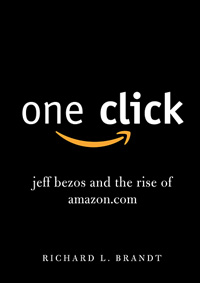
One Click: Jeff Bezos and the Rise of Amazon.com. Richard L. Brandt. Portfolio/Penguin. 208 pages.


Review by Richard Pachter
Do you like biographies?
I love ‘em!
In fact, my first assigned “book report” at P.S. 139 in Brooklyn was a biography, so I chose “The Wright Brothers.”
But I had no idea I was supposed to just read and “report” on only one book, so I checked out three titles from my great little school library, and read about those pioneering aviators from three different authors’ angles. Why not?
I thought my debut book review, er, report, was a great success, except the teacher wrote TITLE? AUTHOR? in big red letters across the top of my 3-hole notebook paper I’d penciled my report on, and she later informed me that I was supposed to “report” on only one book, not several.
Oops.
But from tiny acorns…
This new bio of Amazon.com’s Jeff Bezos is a fun read. Serious but not heavy or ponderous, its author does a fine job chronicling the life of the guy who essentially fulfilled the promise of the Internet as a medium for commerce.
Bezos was preternaturally bright and ambitious, one of those driven kids who loved computers and excelled at all sorts of techy things. But he also spent childhood vacations on his grandfather’s Texas ranch, learning to do a slew of decidedly low-tech chores with cattle, such as cleaning stalls, branding (insert joke here!), castrating and other fun stuff.
He never knew his biological father, who‘d divorced his mom when he was a year and a half old, but she soon remarried and they both took the name Bezos from his adopted dad, a Cuban refugee. The family first lived in Albuquerque, New Mexico, then Houston, Texas, then Panama City and Miami, Florida. He attended Palmetto Senior High in Pinecrest, had a summer job at McDonald’s, and enjoyed a happy childhood and adolescence.
After high school, Bezos started a little company with another Palmetto High graduate, aimed at tutoring advanced fifth-graders and was written up in the Miami Herald. Bezos also received a science prize in the newspaper’s prestigious Silver Knight competition.
After obtaining a degree in computers and electrical engineering at Princeton, Bezos was a highly sought-after recruit. Spurning several impressive offers, he chose a start-up headed by Columbia professors trying to build “a mini-Internet” for Wall Street investors, a full decade before the real Internet came into popular use. Despite enjoying rapid success in the new company, he yearned for his own enterprise and methodically searched for a business to launch on the World Wide Web. After deciding upon bookselling, he applied himself fanatically to his baby, Amazon.com.
Brandt does a good job of weaving an upbeat and appealing narrative thread, making Bezos’ life and quest interesting and compelling. It’s not a lofty literary work, but an example of good long-form journalism. There are numerous interviews with key sources and though Bezos himself may not have provided the author with his own one-on-one, he’s spoken to the media enough times to generate a pool of quotes for Brandt to draw from, as needed.
Perhaps without intending to, Brandt presents a story that’s a classic American tale of tenacity and enterprise. Though not poor, Bezos’ journey, in its own way, is as inspiring as other archetypical American business and creative pioneers’ struggles. And like the Wright Brothers, might encourage other young entrepreneurs — or even nascent book reviewers.

Read more...

Club Reviews: ONE CLICK

Wednesday, February 15, 2012


A book about Amazon.com, a change agent for how we buy not only books but various other products too, is of timely interest.  This book, One Click, is well done and gives you the background into Amazon.com and how the true entrepreneur, Jeff Bezos, did it and made it such a massive change agent. All it took was just one entrepreneur who recognized the impact that the Internet will have on consumers; that software has to be developed to make it easy for the customer to buy with just one click; and the attention to detail the site has to provide so the customer trusts this method of buying.
Beyond the technical, the book also spotlights the tenacity an entrepreneur needs to stick with it even when the so-called experts disapprove, and the insight needed to pick the right product to kick start this major change in buying, in this case, books.
As I have just this month published a book, Power Plug-In, all about energy sources and how to invest in them, much of One Click hit home to me.  It is a 'must read' for everyone for information on how the world is changing and how past business practices might not be of use any more.
To view a free sample chapter of Power Plug-In please visit www.PowerPlug-In.com
Gordon Ettie, Pinecrest, Florida

A fantastic biography of Jeff Bezos (amazon.com). A man that should be in the class with Steve Job and Bill Gates. Technically he can compete with both of them and after his scientific schooling he worked in the financial field. Any other person would have been satisfied with the position that he held and the money he was making, but he had a dream of being an entrepreneur. He did research into every type of business and finally settled on selling books as the best way to build an empire.
Jeff Bezos spent time taking a class on operating a book store and visited many book stores. He figured that selling books on line, with the vast number that he could inventory on the internet, would be a successful venture. The story goes on to detail all of the things that he did. In particular how he raised money to start his business. Unfortunately it took many years to begin making a profit, but his financial backing stayed with him (he was a terrific sales person).
He developed the "one click" technique of ordering and had a monopoly on that patent. He developed all of the warehousing, shipping, ordering, controlling, etc. methods. He hired and fired people (some very intelligent people) like it was a fast food operation. He eventually got the best talent to work for him and built a very successful empire.
Enjoyable reading and a learning experience. Howard Elakman

One Click by Richard L. Brandt is a small book in size but it certainly is an illuminating and intriguing
book that tells the inside story of Amazon.com and its founder and CEO Jeff Bezos. The book is packed full of information revealing the difficulties of working out the kinks of the internet and the competition in order to satisfy customers and make an eventual profit as well as expand beyond Bezos' initial ambition to become the world's largest book seller and  expand to become the electronic destination to sell many different products including shoes (Zappos). What an awakening! Here I thought amazon.com was only a place to purchase books! Mr. Bezos continues to expand his business to pursue  his dream when he was a  valedictorian to provide a commercial enterprise for space tourists that many people can afford. Through his company Blue Origin his wish to create a comfortable,  affordable, safe and exciting service in space may just become a reality! He seems to be well on his way. Few executives seem to be able to follow his positive forward looking philosophy. Perhaps they fear the outcome!  Jeff Bezos certainly doesn't seem to fear anything!!! What a joy to read One Click! Margot Byrnes, Miami, Florida

Learned a lot about Amazon.com, but would have liked more depth on Jeff Bezos, the man.  Fast and interesting read – worthwhile summary of the dot.com era. Doramary Russell, Coral Springs, Florida

How can a book be both riveting and boring at the same time? While the information conveyed in one click is interesting – after all you’re talking about one of the greatest success stories of our time – the bland, yet breathless tone of the tale leaves me empty. It’s the hyperbole surrounding a simple subject, also the hallmark of Amazon’s success, which permeates this book. I enjoyed reading the information contained in this book. I just didn’t particularly enjoy the manner in which the story was told. As I read the book, I kept getting the feeling that the writing was formulaic (Begin with this type of sentence, proceed to description, finish with conclusion.”)
Still, it’s a simple, easy read as a way of learning something about the path to success of Amazon.com’s creator. What stands out in the story of an über-successful entrepreneur is that to be a successful entrepreneur means to have single-minded focus and be extremely flexible, and to know when to be which. The nuggets to be mined in this tale don’t require much of a stretch to get there. Anne Bloom, Davie
 
I thoroughly enjoyed this book from the beginning to the end.  eff Bezos is a true entrepreneur.  I liked how he began by taking a course on how to sell books which included customer service.  This area is what makes him so big today with Amazon. His one aim is customer service and has stayed true to that. He built his customer base by selling at a loss but in the end it made him money. He had a great foresight to see what was happening and he joined in when he could and if he couldn't he would create his own. He knew what he wanted and he made sure he got it at whatever cost. He was an intelligent negotiator when he knew what he wanted at whatever cost. He built up his stock value doing just that. He had a high expectation of the type of employees he wanted to hire. I found that very interesting; they would have to provide their SAT scores along with their grade point average but still he had a vision and he made it happen. His business tactics were unusual but again, he made it happen. He played hard ball when he needed and most of the time he still came on top. When the big crash happened he lost a lot of money but he did not fold, he lost a lot but he had to make tough choices. The creation of Kindle was genius. With Apple and the iPad and iPhone he had to do something too and Kindle was it  He knew exactly what he wanted and again he made it happen. Patricia Garcia, Miami

When one reads Brandt’s book, it feels like sitting down with him in a Starbucks and hearing all the interesting stories he knows about Jeff Bezos and Amazon.com.  Not all the stories show the positive side of Amazon and the book balances well with customer service problems and fights with publishers along with amazing innovation. The book flows logically and communicates stories extremely well in a conversational tone.  In addition to learning about how Amazon was created and grew, chapters on Bezo’s management style, impact of the Kindle on publishing and competing with bookstores are explored very competently and interestingly.  It is a book well worth reading especially if you are interested in the future of the bookstore and publishing. Randy B. Lichtman,  Miami, Florida

ONE CLICK was a bit disappointing.  I love Amazon, and thought this book would give an insider's view of how the company was born and grew.  Based on the cover of the book, one would think this was a book about Amazon.  But I guess you can't judge a book by its cover.  The book seems to be more of a compilation of news articles over the past 10 years.  Very little of what was in the book was new information that I already didn't know.
As far as the book being a biography about Jeff Bezos, it is lacking in that respect as well.  If the book would have been well written and insightful on Jeff Bezos the same way the STEVE JOBS biography by Walter Isaacson was, then it would have been a hit.  The problem is that this isn't really a biography on Jeff Bezos either.
This book is stuck somewhere halfway between a book about Amazon and a book about Jeff Bezos.  Unfortunately, it is very shallow on both of those subjects.  It lacks the appropriate amount a depth that should be given to each.
As far as the format of the book, the small size is easy to carry around with you to read.  It does however get a bit difficult to read about halfway through the book because the page size is small, margins are small, and typeface is small.
It is hard to recommend this book to others.  If you aren't interested in Amazon or Jeff Bezos, then you probably won't be interested in reading this.  If you are interested in Amazon or Jeff Bezos, then you probably already know 90% of the information in this book anyway. Frank Donn, Miami, FL

Richard Brandt paints an insightful and engaging account of one of today's most successful entrepreneur's. R. W. Groce, Miami

I don't know if this book really knows what it wants to be.  When I saw the size of the book, it made me think it could be no more than a cursory  look at Bezos and Amazon and, in many instances, it is.  It is not a biography.  It is not a company history, per se.  Overall, it is a moderately well-researched, passable overview (especially of the early years) of Jeff Bezos and Amazon.com.
It felt throughout as if the author could not bring himself to be any more than begrudgingly complimentary of Bezos, his business and entrepreneurial acumen, and his management style.  The sucess of Amazon and Bezos's other ventures seem to grate on Brandt, as if he keeps searching for dirt but can't find exactly what he wants.  Ultimately, it appears Brandt is unable to decide whether Bezos is a genius or a ruthless businessman willing to kill his own creator to get ahead.  Why can't he be both?
I finished the book feeling like I had only touched on what makes Jeff Bezos tick, and what makes the Amazon story so compelling.  With just a little more effort, Brandt could have taken us much closer to finding the answers, rather than leaving the reader with more questions. Scott Rembold, Coral Gables, FL

I was so excited to be reading about my favorite shopping site, Amazon. Then the book arrived and it was so cute and compact.  I thought, "This will be great, a quick read, hold my attention..." As tiny as it is, it could be tinier. This story could be told over coffee, not a five course dinner!

Sorry, it's not that interesting. (I still love Amazon.com, though!) Good news for stock holders, I'll be using my Prime membership to buy another book tomorrow. Kelly Reid

Richard L Brandt has written a fantastic chronology of the phenomenon of on-line marketing as epitomized by the archetypal leader, Jeff Bezos, the founder of Amazon.com.    For anybody interested in the delivery of knowledge, Bezos’s innovations, which he applied in the 1990’s, cannot be diminished.  Ideas like reader’s reviews, the marketing of a used-copies network, and technological developments like self publishing, are to his credit.  His contributions are a crucial piece of the puzzle, when we wonder what happened to Borders.
Besides retelling how the visionary accommodated and incorporated publishers and the associate suppliers;  this small book includes a discussion of the marketing and a customer service philosophy, a way of growing an original idea, in spite of the corporate competition from the giant bookstores.  There are lessons here about the venture capitalists, the ways of start-ups, and it is fascinating to see how Bezos’s intelligent team promoted online ordering through this process.  He originated the idea of customer feedback linkages, “others who purchased this book, also liked” and thereby created individualized demand, even while selling at a loss. Here was a new way of feeding publisher content, that  revolutionized the delivery of books, which others could only imitate. In the later chapters the author discusses the expansion of the Amazon trademark to other goods, clothes, industrial products and sports gear. In the last chapter there is a very interesting account of his strategy to make the Kindle, the trend setting eReader, a new delivery method of knowledge. I think it is worth the cost of the downloadable that yes, you can even get at the Miami Public library now, and then buy it if you like it. SO many good lessons here about marketing to consumers.
The jury is still out as to how the eBooks will impact formal education, with their cost savings and capacity for international knowledge exchange. But Jeff Bezos, the leader of this open-knowledge revolution, may get credit for having encouraged reading original sources again, including newspapers, and reclaiming access to full content, while giving customers what they want. And this quasi-history does him justice. The literary world is more accessible today than ever before and getting bigger.  Thanks to Jeff Bezos’s  inventions, his Kindle, his network  and his modification of the book supply chain while retaining individuality;  now great literature and some not so great literature is accessible like never before. Read this book and think about the impact of all the other markets of personal items, ideas and services, which Amazon has made possible.
You can take the book with you, its small size is as convenient as a Kindle.  Jim Swaner

An informative read.  The glowing, almost reverential tone perhaps contributes to the feeling of the “slogging” style and pace of the story.  Still worth the effort to learn more about the man who transformed not only the bookselling business but e-tailing in general. Zac Hall, Miami

Mr. Brandt has adequately forged the point of how Jeff Bezos and his bold actions brought success to selling items & competing with established booksellers and winning. Click, with its interesting story format and illustration, certainly gave me an insight on how knowing and focusing on what a consumer may want, can result in the probability of being  right in the formula for success. EJ "Henry" Ventura Jr., Coral Gables

I finished reach One Click.  Before reading this book I had some knowledge of the history of Amazon and of Jeff Bezos himself. This book definitely shed more light on how it all started and how much of a genius Jeff really is. I was certainly impressed by his hard decision to leave his high paying Wall Street job to follow his dream, this is something not many of us have the testicular fortitude to do.
The philosophy of Silicon Valley start-ups is quite interesting: the hire the best people, which are those who don't know that something "can't be done," and therefore will figure out how to do it.  I wish many other industries would apply this philosophy when they put together their teams. They hire people with tons of experience but who are also boggled down by conventional thinking, which in many cases prevents them from thinking outside the box and finding truly innovative solutions.
When analyzing decisions from now on I will forever remember Jeff's "regret minimization framework."  Which decision would he regret more if he made either one?  It's a nerdy way of looking at it but it totally works for me.
Overall I think this book is a nice read and it sheds light on one of the coolest and innovative online companies today and a true survivor of the dot-com boom. I would, however, enjoy it more if it had additional input from Jeff Bezos himself. Jeff is an innovator and the book on his life is yet to be written because the best is yet to come. David Mesas

At first glance "One Click" seemed like just another book about some nerdy guy that started an Internet business and got lucky when it took off. The more I read, the more interested I became in Amazon founder, Jeff Bezos. The story that best illustrates his quirkiness and strategic approach to life was the criteria he used to select a mate: "She has to be someone who is resourceful enough to get me out of a third-world prison."  That says more about him and his values than anything else in the book.
Author Richard Brandt does not make Bezos sound like a very nice person. In fact, it's difficult to get a sense of Bezos' personality because of Brandt's journalistic style. Most of the people who knew the subject in his early years don't remember much about him. The author falls short of calling him a narcissist, but lets the reader know that Bezos had a single-minded purpose (an obsession?) in creating Amazon.com and would definitely not be considered a "people person."  The description of his youth and the fact that his grandfather worked for DARPA made this reader think that some people are just genetically destined to affect change and are born in just the right place and at precisely the right time. This certainly seems to be the case with Jeff Bezos. I came away from "One Click" admiring Jeff Bezos, but not feeling much affection toward him. Somehow I don't think he would care. Kathy D. Doran, Miami Beach

Read more...

  © Template by Ourblogtemplates.com 2008

Back to TOP